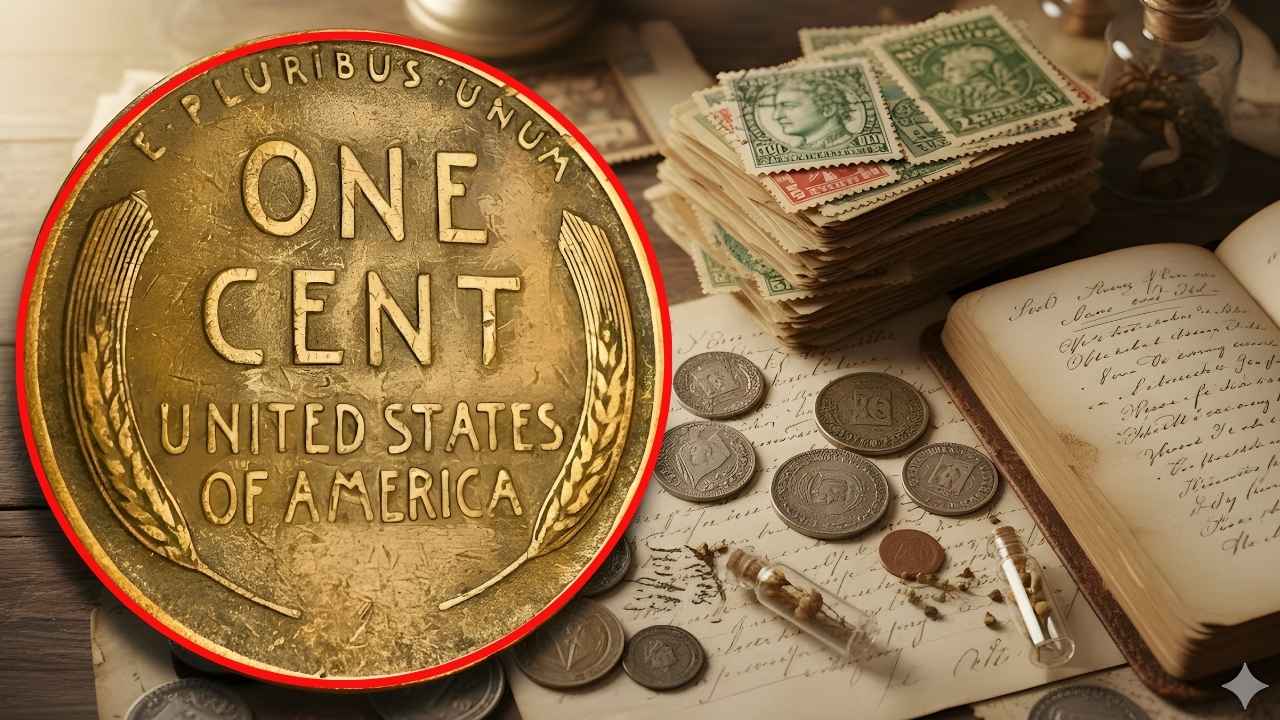
Lincoln Wheat Penny The Lincoln Wheat Penny was first minted in 1909 to honor the centennial of Abraham Lincoln’s birth. It marked a turning point in American coinage as the first circulating coin to feature a real person rather than a symbolic figure. Designed by Victor David Brenner, the obverse displayed Lincoln’s portrait, while the reverse featured two wheat stalks symbolizing prosperity and growth. Its elegant simplicity quickly captured public admiration.
Lincoln Wheat Penny Key Dates and Varieties
| Year | Mint | Variety | Why It’s Important | Estimated Value Range |
|---|---|---|---|---|
| 1909 | S VDB | Designer initials | Rare, limited release | Thousands of dollars |
| 1914 | D | Low mintage | Scarce and highly sought | Hundreds–thousands |
| 1922 | No D | Mint error | Missing mint mark | Thousands in high grade |
| 1931 | S | Depression-era scarcity | Limited production | Hundreds–thousands |
| 1943 | Steel | Wartime issue | Zinc-coated steel composition | Affordable, collectible |
| 1943 | Copper | Error coin | Struck on copper planchet | Hundreds of thousands |
| 1955 | Doubled Die | Error variety | Dramatic doubling | Thousands of dollars |
This table highlights the most famous Wheat Penny varieties, showing why certain dates and mint marks are prized by collectors.

Early Reception and Public Demand
The release of the Lincoln Wheat Penny generated immense excitement. Americans lined up at banks to obtain the new coin, and its popularity was immediate. Lincoln’s image resonated deeply with the public, making the coin a fitting tribute to one of the nation’s greatest leaders.
The Controversy of the VDB Initials
Victor David Brenner’s initials, VDB, appeared prominently on the reverse of the 1909 coins. Critics argued they were too large, leading the Mint to remove them later that year. This created two distinct varieties: the 1909 VDB and the 1909 without initials. The 1909‑S VDB became one of the rarest and most valuable Wheat Pennies.

Changes in Design and Composition
While the design remained consistent, adjustments were made over the years. During World War II, copper shortages led to the 1943 steel penny, struck in zinc-coated steel. These coins are easily recognizable and remain popular among collectors. Rare copper versions accidentally struck in 1943 are among the most valuable pennies ever discovered.
Key Dates and Rare Varieties
Collectors prize coins such as the 1909‑S VDB, 1914‑D, 1922 No D, and 1931‑S. Each has a unique story and scarcity that adds to its value. High-grade examples of these coins often sell for thousands at auction.
The End of the Wheat Design
The Wheat Penny remained in production until 1958. In 1959, the reverse was changed to feature the Lincoln Memorial, marking Lincoln’s 150th birthday. While the new design was well received, the Wheat Penny retained its place in history and collector demand.
Collecting Lincoln Wheat Pennies
The series spans nearly five decades, offering a wide range of dates and varieties. Beginners often start by searching through coin rolls, while advanced collectors seek rare and high-grade examples. Its accessibility makes it appealing to collectors of all levels.

Determining Value
Value depends on rarity, condition, and demand. Common dates in circulated condition may be worth only a few cents, while rare varieties in pristine condition can command thousands. Professional grading services and auction results help establish accurate values.
Famous Auction Sales
The 1909‑S VDB in top condition has sold for tens of thousands. The 1943 copper penny has reached hundreds of thousands at auction. These extraordinary sales highlight the hidden potential of small coins.

Cultural Significance of the Wheat Penny
Beyond monetary value, the Wheat Penny represents innovation and resilience in American history. Its design reflects admiration for Lincoln and the nation’s progress. For many, it is both a collectible and a symbol of heritage.
Tips for New Collectors
- Learn about key dates and varieties.
- Examine coins carefully for mint marks and unusual features.
- Use magnifying tools and coin albums for organization.
- Be patient and enjoy the process of discovery.
Preserving Your Collection
Store coins in a cool, dry environment. Avoid cleaning, as it reduces value. Use protective holders or albums to safeguard coins from damage. Proper preservation ensures long-term value.
The Thrill of the Hunt
Collectors enjoy searching through rolls of coins or inherited collections, hoping to uncover rare varieties. The possibility of finding a valuable coin in everyday change adds adventure to the hobby.
Why Collectors Treasure the Wheat Penny
The Lincoln Wheat Penny blends history, artistry, and rarity. It offers a tangible connection to the past and a sense of accomplishment in building a collection. Its enduring popularity reflects its cultural significance and appeal across generations.
Final Verdict
The Lincoln Wheat Penny is more than just currency; it is a collector’s treasure. From the 1909‑S VDB to the 1943 steel and copper varieties, each coin tells a story of innovation and heritage. For collectors, the Wheat Penny represents accessibility, challenge, and timeless value.
Disclaimer
This article is for informational purposes only. Coin values fluctuate based on rarity, condition, and market demand. Readers should consult professional numismatists or grading services before buying or selling rare coins.